
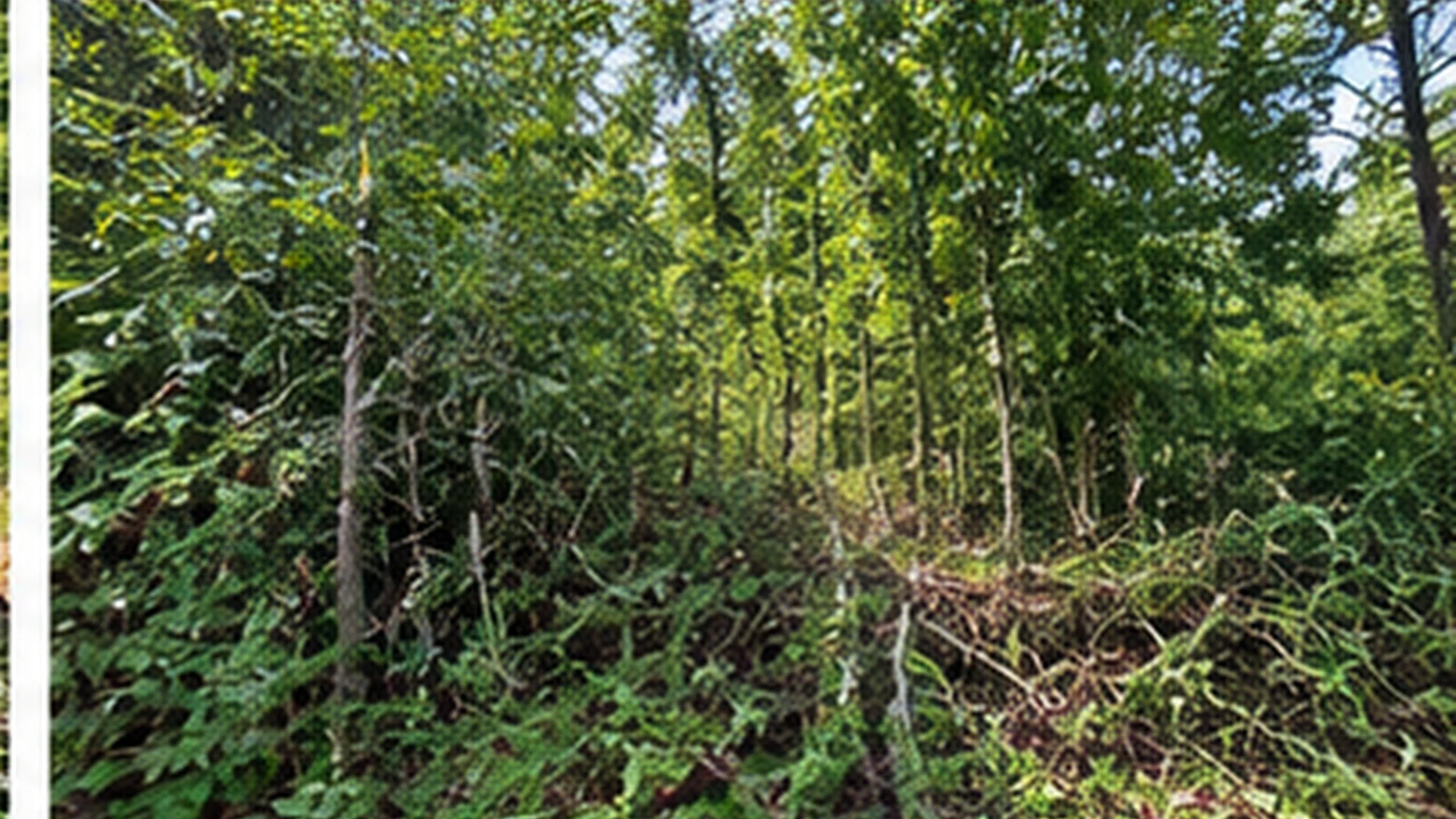
Reclaim Overgrown Land
Forestry mulching uses a purpose-built attachment to cut and process brush, woody vegetation and suitable small trees into material left on the ground. It can help open overgrown acreage, improve access and make property more manageable without requiring every piece of vegetation to be hauled away.
Where Forestry Mulching Makes Sense
Overgrown Acreage
Reduce dense brush and unwanted woody growth on recreational, residential and rural properties.
Trails, Access and Fence Lines
Open or restore routes through vegetation, subject to terrain, access and the desired width.
Property and Development Planning
Clear vegetation as one stage of a larger project. Additional stump removal, excavation, grading or other work may be required for the intended use.
What Mulching Does—and Does Not—Do
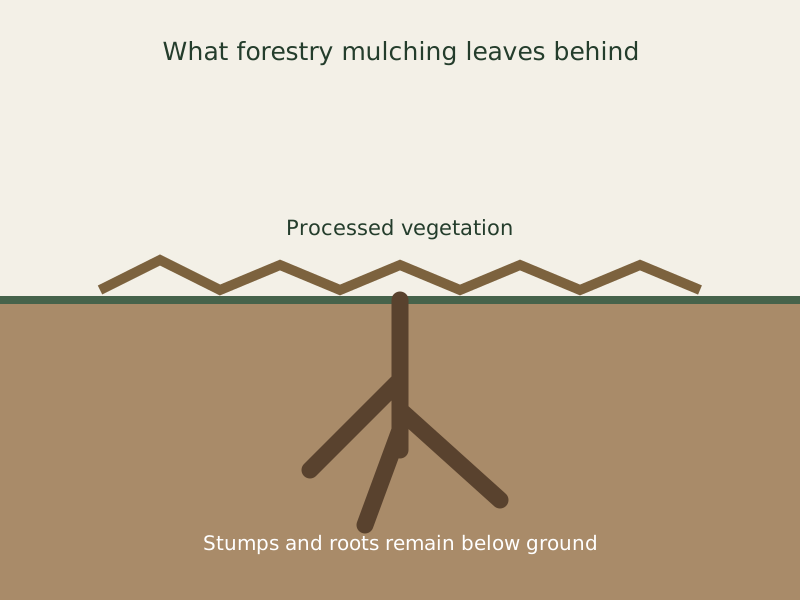
Forestry mulching leaves stumps and root systems in the ground. It is not excavation, does not create a finished lawn, and is not construction-ready grading. It does not automatically remove buried debris, correct drainage or establish a finished surface.
Mulching can reduce invasive woody vegetation, but it does not guarantee eradication. Some species resprout or regenerate from seed, and follow-up treatment or maintenance may be necessary.
Equipment and Site Conditions
Mulching is done with a compact track loader carrying a forestry mulching head sized to the job. What that machine can achieve depends on vegetation size and density, terrain, soil moisture, hidden obstacles and access width. Not every site is suitable for the same approach, and the equipment is confirmed against the actual property before work is accepted.
How a Project Is Quoted
We review the property location, approximate acreage, vegetation density, terrain, access, desired finish and cleanup requirements. Photos and a boundary screenshot are helpful. A site assessment may be needed before a final scope and price can be established.
Plan the Next Stage
If your goal includes construction, a driveway, a lawn or substantial stump removal, explain that in your enquiry so the clearing work can be planned around the next stage rather than treated as a finished site.
Related
Common questions
Does forestry mulching remove stumps and roots?
No. It processes suitable above-ground vegetation while stumps and root systems remain in the ground. Separate stump removal or excavation may be required.
Will the property be ready for construction afterward?
No. Mulching is vegetation management, not construction-ready grading. Additional work may be necessary for foundations, roads, drainage or other improvements.
What happens to the mulched material?
Processed vegetation is generally left on the ground. The amount and finish depend on the vegetation and project scope; any additional cleanup should be discussed in the quote.
Can mulching eliminate invasive plants permanently?
No. Some invasive species resprout or regenerate. Follow-up management may be needed.
How much does forestry mulching cost?
Costs depend on acreage, density, terrain, access, finish requirements and mobilization. A site-specific quote is more useful than a universal per-acre price.
Can you work on wet or steep ground?
Suitability depends on actual conditions and equipment limitations. Wet ground, slopes and hidden obstacles must be assessed before a method is confirmed.